










Work Life Balance Isn’t a Luxury Anymore — It’s a System Problem
For years, work life balance has been treated like a personal failure.
If you feel exhausted, overwhelmed, or permanently behind, the narrative has been simple: you need better discipline, stronger habits, more motivation.
But here is the truth most high performers eventually discover:
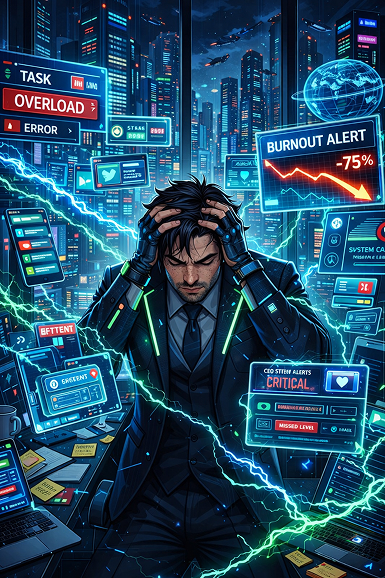
Burnout is rarely a willpower problem. It is a systems problem.
In a world of constant notifications, fragmented tools, and endless to-do lists, even the most ambitious professionals are running on invisible cognitive debt. The cost shows up slowly—decision fatigue, loss of focus, emotional detachment, and the quiet sense that work is bleeding into everything.
This is why work life balance can no longer be solved with advice alone.
It requires infrastructure.
Dominum was built to be that infrastructure.
The Modern Work Life Balance Crisis
Work life balance used to mean “working fewer hours.”
That definition no longer applies.
Today, people work fewer physical hours—but far more mental hours.
What makes Dominum different
Dominum replaces endless lists with structured clarity
- You might close your laptop at 7 p.m., yet your mind keeps running:
- unfinished tasks
- missed priorities
- tomorrow’s decisions
- background stress you’ve normalized
This is the hidden cost of modern productivity systems. Most tools optimize output, not recovery. They track tasks, not cognitive load. They push engagement, not sustainability.
- As a result, even highly organized people feel:
- mentally cluttered despite being “productive”
- constantly reactive instead of intentional
- successful on paper but depleted in reality
True work life balance is not about doing less work.
It is about working with clarity—and fully disconnecting without guilt.
These tools don’t create balance.
They create organized burnout.
Common failure points include:
Cognitive Overload: You are constantly deciding what to do next. The tool shows you everything, all the time.
Notification Fatigue: Reminders meant to help end up fragmenting focus and extending work into personal time.
No Energy Awareness: All hours are treated as equal, even though your mental capacity is not.
Tool Sprawl: Tasks in one app, notes in another, automation somewhere else—each switch costs attention.
Most productivity apps were not designed for humans under pressure.
They were designed to capture tasks.
To-do lists, reminders, kanban boards, calendars—each solves a fragment of the problem, but none address the full system of how work interacts with energy, attention, and decision-making.
Why Traditional Productivity Tools Fail at Work Life Balance
Redefining Work Life Balance: From Boundaries to Design
Work life balance is not about stricter boundaries. It is about better systems.
- When your productivity system:
- clarifies priorities automatically
- reduces repetitive decisions
- respects energy cycles
- automates low-value work
Balance becomes a natural outcome—not something you fight for.
This is the philosophy behind Dominum.
Dominum does not ask you to “try harder” or “wake up earlier.”
It removes the invisible friction that makes balance impossible in the first place.
How Dominum Supports Real Work Life Balance
Dominum is a productivity app designed specifically to help people own their time without burning out.
It approaches work life balance as a strategic system, not a motivational concept.
Planning That Reduces Mental Load
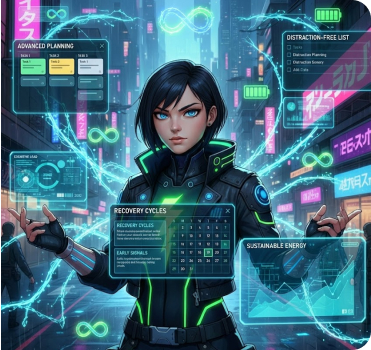
Dominum includes a structured planning section that allows you to:
auto-delegate tasks
automate repetitive work
execute intentionally
Tasks can be managed through:
clean, distraction-free lists
visual task cards
calendar views designed for time ownership
Instead of constantly reorganizing your workload, the system helps you decide once—and move on. This alone eliminates dozens of daily micro-decisions that drain energy.
Energy-Centered Work Life Balance Metrics
Unlike traditional productivity tools, Dominum includes an Energy Section built around human KPIs—not vanity metrics. These include:
focus quality
recovery cycles
cognitive load management
early burnout prevention signals
The goal is not to push harder.
The goal is to sustain performance without sacrificing life outside work.
If you want to explore the deeper science behind this approach, Dominum provides a dedicated resource here: https://dominum.app/work-life-balance
No-Code Automation That Gives Time Back
One of the fastest ways to restore work life balance is to eliminate repetitive thinking.
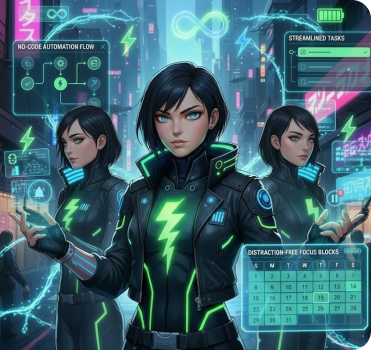
Dominum includes an intuitive, no-code automation layer that allows you to:
automate recurring tasks
trigger workflows effortlessly
reduce manual follow-ups
No complex setup. No technical friction.
The result is fewer interruptions, fewer decisions, and more uninterrupted focus blocks—both at work and after hours.
Digital Avatars That Scale You Without Burnout
Dominum introduces a powerful concept: digital avatars. These are intelligent extensions of your authentic self designed to handle repetitive execution and decision patterns. Instead of being everywhere at once, you delegate cognitively—without losing control or identity.
This allows ambitious professionals to:
scale output
protect personal time
remain present outside work
Work life balance becomes structural, not aspirational.
Work Life Balance, Rebuilt for High Performers
High performers do not lack ambition or discipline. They struggle because they are using productivity models designed for a slower, simpler era. When work scales but systems do not, the result is silent inefficiency, cognitive overload, and the false belief that exhaustion is the price of success.
Dominum is built for founders scaling fast, executives navigating constant decisions, professionals managing complex workloads, and ambitious individuals who sense their current system is quietly leaking time and energy. For this level of performance, work life balance is not about slowing down—it is about eliminating friction so focus and energy are used intentionally.
The most successful professionals are not those who work the longest hours. They are the ones who recover effectively, minimize unnecessary decisions, and operate in deep focus. Dominum enables this shift by reducing cognitive debt, protecting attention, aligning work with energy, and automating what should never require human effort.
When your productivity system thinks ahead of you, respects your limits, and gives time back automatically, work life balance stops being something you chase. It becomes the default. You finish work with clarity, disconnect without anxiety, and show up rested—without falling behind.
This is not discipline.
This is design.
If you are serious about work life balance and done with tools that promise productivity while quietly fueling burnout, Dominum was built for you. It is not another task manager—it is a system for owning your time, energy, and focus.
Try Dominum.
Reduce cognitive load.
Build work life balance into the system—not your willpower.
Frequently Asked Questions About Work Life Balance
Meaning of Work Life Balance?

Work life balance refers to the ability to effectively manage professional responsibilities while maintaining personal well-being, relationships, health, and time for rest. It is not about working fewer hours, but about creating a sustainable system where work does not consistently interfere with life outside of it.
True work life balance means:
- Clear boundaries between work and personal time
- Manageable cognitive and emotional load
- Time for recovery, not just productivity
- Consistent energy, not chronic exhaustion
In modern work environments, achieving work life balance increasingly depends on systems—such as productivity and planning tools—that reduce unnecessary decisions and mental overload rather than relying on willpower alone.
Work Life Balance Quotes?
Here are some widely applicable and original work life balance quotes suitable for inspiration:
- Work should support your life, not consume it.
- Balance is not about dividing time equally—it's about using energy intentionally.
- Productivity without recovery is not success; it's deferred burnout.
- You don’t need more hours in the day—you need fewer decisions draining them.
- Work life balance begins when your system protects your time for you.
Own your time. (How Dominum helps people build real work life balance.)
Countries With Best Work Life Balance?
- Denmark – Shorter workweeks, high job satisfaction, strong social safety nets
- Netherlands – Flexible working hours and part-time work normalization
- Norway – Emphasis on well-being and generous parental leave
- Sweden – Focus on work flexibility and mental health
- New Zealand – Progressive work policies and strong quality of life
Work Life Balance Tips?
- Prioritize outcomes, not hours
- Focus on what truly matters instead of staying busy or reactive.
- Reduce decision fatigue
- Automate or standardize repetitive tasks whenever possible to preserve mental energy.
- Plan based on energy, not just time
- Schedule demanding work when focus and cognitive capacity are highest.
- Set clear shutdown rituals
- End workdays intentionally to support mental recovery and prevent work from spilling into personal life.
- Use systems, not willpower
- Productivity tools that organize, automate, and prioritize work make balance sustainable over time.
By aligning tasks with energy, automating unnecessary decisions, and continuously adjusting to real-world conditions, Dominum turns work life balance from advice into a living system—one that protects time automatically instead of relying on constant self-control.
Importance of Work Life Balance
Strong work life balance leads to:
- Higher productivity and focus
- Lower burnout and stress levels
- Better physical and mental health
- Improved decision-making
- Sustainable career growth
Work life balance is not a reward after success.
It is a requirement for sustaining it.
Own your time. (Dominum helps turn work life balance from an intention into a system.)